This structured approach, endorsed by the Health and Safety Executive (HSE) and required under UK law, helps employers prioritise the most effective ways to eliminate or reduce risk. Understanding it properly can significantly reduce accidents, strengthen compliance, and protect your business in the event of an inspection.
Why the Hierarchy Matters
The Hierarchy of Control Measures is central to UK risk management. Guided by the Management of Health and Safety at Work Regulations 1999 and the Health and Safety at Work etc. Act 1974, it directs employers to take the most reasonably practicable action to prevent harm, not just the most convenient one.
The key principle: not all control measures are equally effective. The hierarchy encourages you to apply solutions in order of reliability, starting with eliminating the hazard altogether, and only resorting to personal protective equipment (PPE) when no better option exists.
This framework is not just theoretical. It's a practical, legally defensible decision-making tool. Organisations that skip directly to PPE or training, without first exploring elimination or engineering options, leave themselves exposed both to harm and to enforcement action.
The Five Levels of Control
The hierarchy is represented as a pyramid, with elimination at the top (most effective) and PPE at the base (least effective).
| Level | Control Measure | What It Means | Example |
|---|---|---|---|
| Level 1
Elimination |
Remove the hazard entirely | Physically remove the risk from the workplace so no one can be harmed by it | Assembling components at ground level to remove the need to work at height |
| Level 2
Substitution |
Replace the hazard with something less risky | Swap out hazardous materials, equipment, or processes for safer alternatives | Using water-based paints instead of solvent-based paints to reduce fume exposure |
| Level 3
Engineering Controls |
Isolate people from the hazard through design or equipment | Install or redesign systems to reduce exposure, built into the environment, (not reliant on human behaviour) | Fitting machine guards, installing fume extraction, adding soundproofing barriers |
| Level 4
Administrative Controls |
Change the way people work to reduce exposure | Implement policies, procedures, and training (effective, but dependent on consistent human behaviour) | Scheduling noisy operations outside peak hours; introducing permit-to-work systems |
| Level 5
PPE |
Protect individuals as a last resort | Use equipment that protects the worker when no higher control is reasonably practicable | Providing gloves, safety goggles, or respiratory protection for chemical handling |
Applying the Hierarchy in Real Workplaces
Here's how this looks when applied to two of the most common workplace risk scenarios.
- Level 1 Relocate noisy operations to a separate area, away from other workers
- Level 2 Replace old, noisy machinery with quieter modern equivalents
- Level 3 Install acoustic enclosures or soundproof barriers around the source
- Level 4 Limit individual exposure time; rotate tasks across the team
- Level 5 Provide hearing protection and enforce consistent use
- Level 1 Work from the ground where possible, use extendable tools or pre-assembled components
- Level 2 Use scaffolding instead of ladders for improved stability and reduced risk
- Level 3 Fit guardrails, toe boards, or safety nets as permanent fall prevention
- Level 4 Provide formal training and ensure adequate supervision of all height work
- Level 5 Provide and enforce use of harnesses and lanyards where residual risk remains
Notice how in both examples, control effectiveness diminishes as you move down. The more you rely on human action (training, reminders, or equipment worn by individuals), the greater the residual risk.
Documenting Controls in Your Risk Assessments
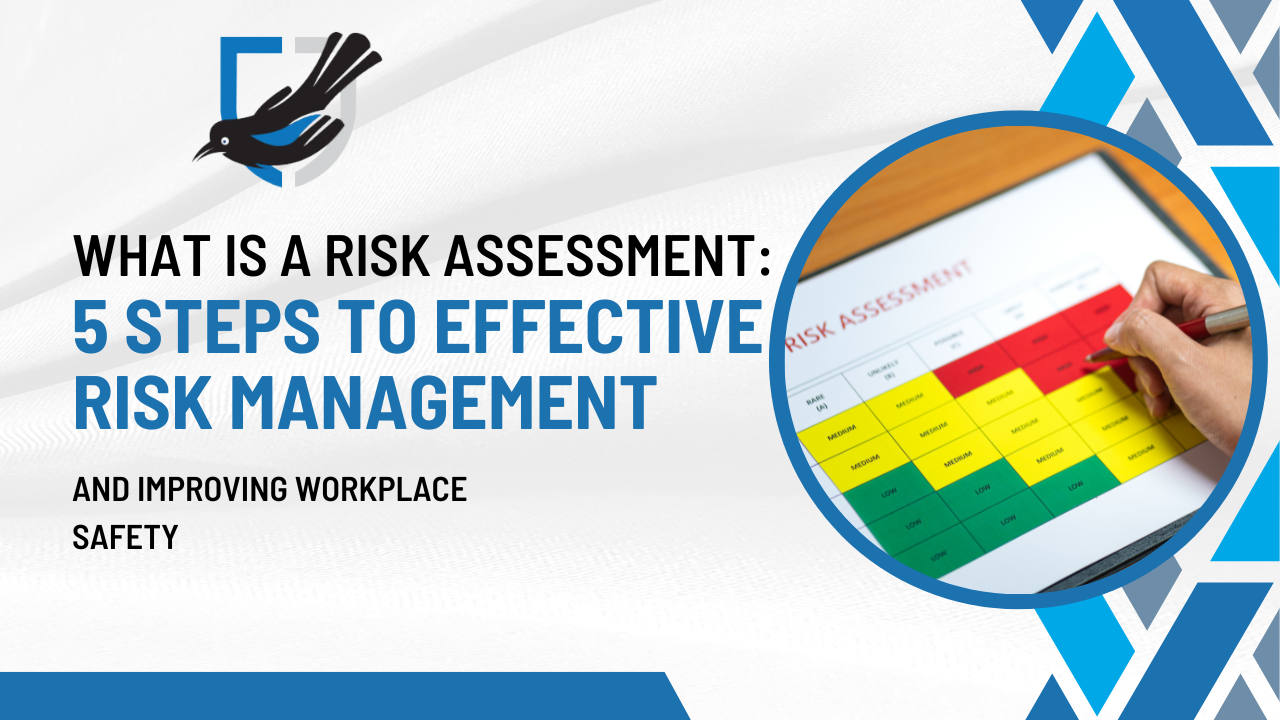
It's not enough to have the right controls in place, you need to be able to demonstrate them clearly in writing. A well-documented risk assessment should show:
- What controls currently exist at each level of the hierarchy
- Why higher-level controls were not practicable, where relevant
- What residual risk remains after controls are applied
- Review dates to ensure controls remain appropriate as work changes
At Westley Lansdowne, we regularly review risk assessments for businesses across Leicester and the East Midlands. The most common gap we find is organisations that jump straight to PPE or training, without documenting why elimination or engineering controls were not feasible. This creates a compliance gap that an HSE inspector will find.
Summary: Applying the Hierarchy Effectively
The Hierarchy of Control Measures is the foundation of legally compliant risk management in the UK. Used correctly, it ensures your approach is both practically effective and defensible under the Health and Safety at Work Act 1974 and the Management of Health and Safety at Work Regulations 1999.
- Always start with elimination, only move down the hierarchy when a higher-level control is genuinely not practicable
- Combine controls where a single measure is not sufficient on its own
- Document your decisions clearly, including why lower-level controls were chosen
- Review your assessments regularly, particularly when work processes change
- Involve your team, the people doing the work often identify the most practical solutions
Need a second opinion on your risk assessments?
We help businesses across Leicester, the East Midlands, and the UK build risk assessments that are practical, compliant, and built to stand up to scrutiny. Get in touch for a free initial conversation.
Talk to the team →